


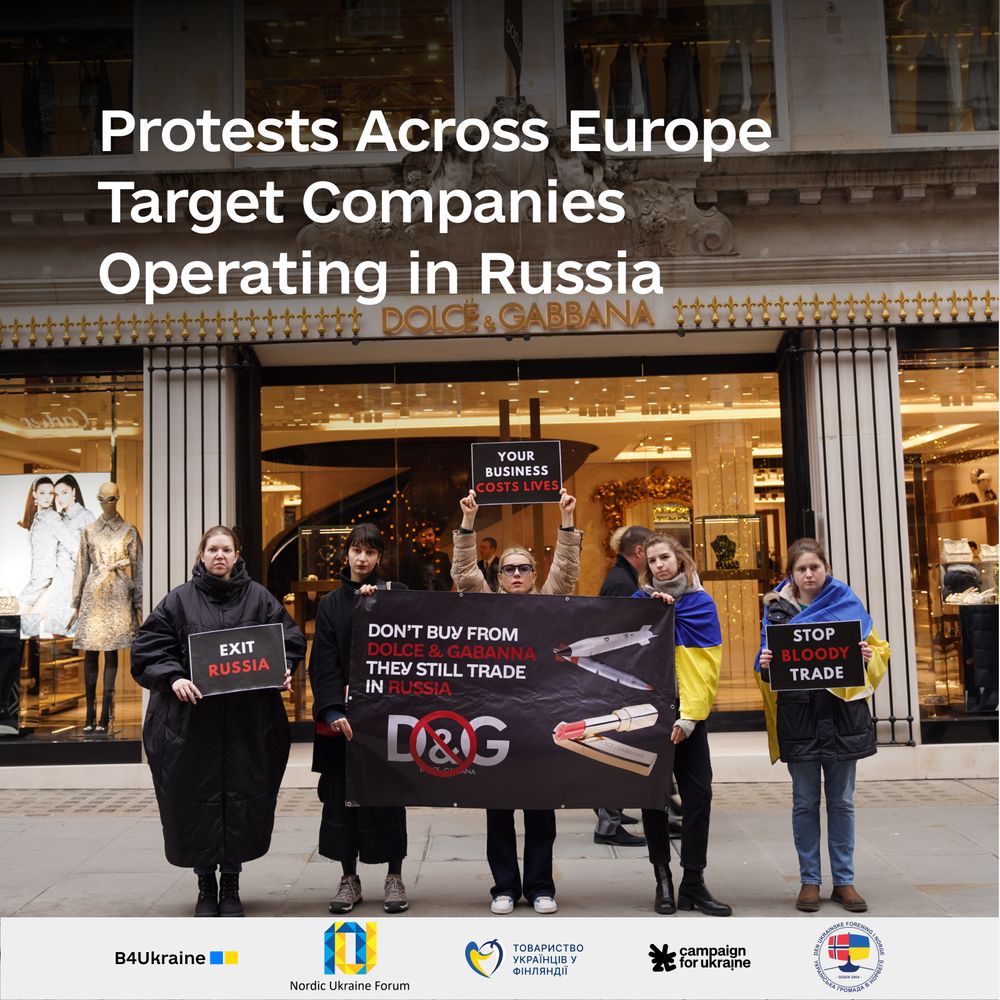


From London to Stockholm, from Helsinki to Oslo, Ukrainians and their allies are filling European city centres with one message to global firms: Stop bankrolling Russia’s war. Leave the Russian market. Now.
This week, a wave of demonstrations took place in four European capitals, calling on Western companies to leave the Russian market, stop paying taxes into the Russian state budget, and end any contribution to the economy of a country that has waged a full-scale war of aggression against its democratic neighbour for nearly four years.
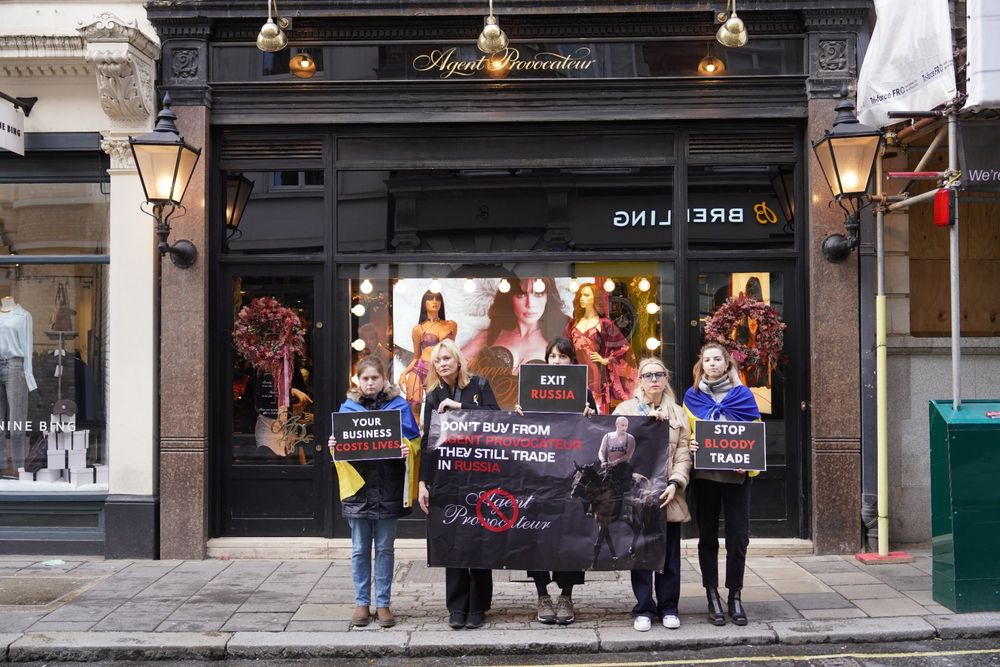
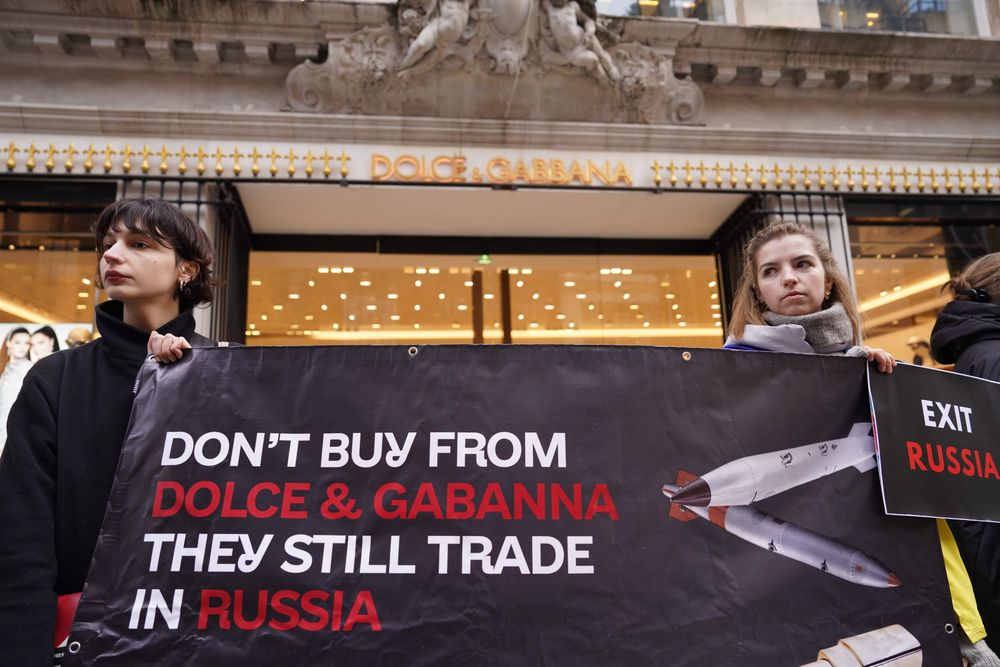
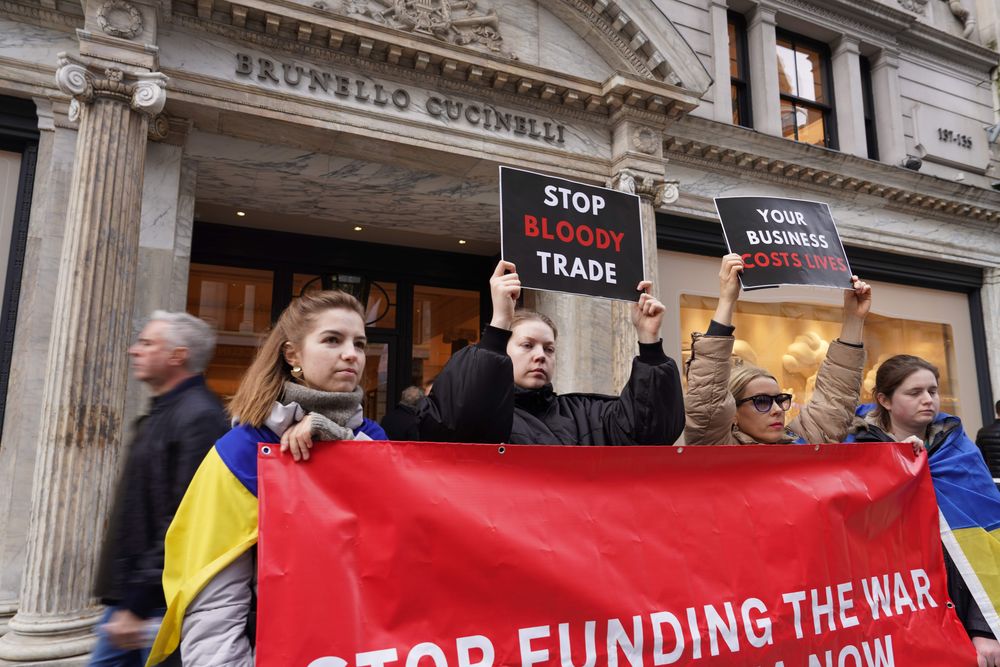
In London, activists marched to the boutiques of Brunello Cucinelli, Agent Provocateur and Dolce & Gabbana, urging these companies to exit Russia and raising public awareness about corporate complicity in the war.
“Companies that continue paying taxes in Russia are unquestionably helping the Kremlin finance its war. It’s the same war chest funding missiles that destroy Ukrainian cities and fueling Europe’s largest refugee crisis since WWII,” said Olena Ivashchenko, a Campaign for Ukraine activist.
Agent Provocateur, a British lingerie retailer, has 12 franchise stores still operating in Russia. Franchisees pay royalties to use the brand and sell its products. This model enables Russian partners to grow and pay taxes into the state budget.
Dolce & Gabbana, an Italian luxury fashion house, has substantially increased direct exports to the Russian market and has no plans to withdraw, according to the Kyiv School of Economics.
Brunello Cucinelli, another Italian luxury group, has reportedly “blatantly disregarded EU law by continuing to sell ultra high-value luxury goods in Russia,” according to short-seller Morpheus Research.
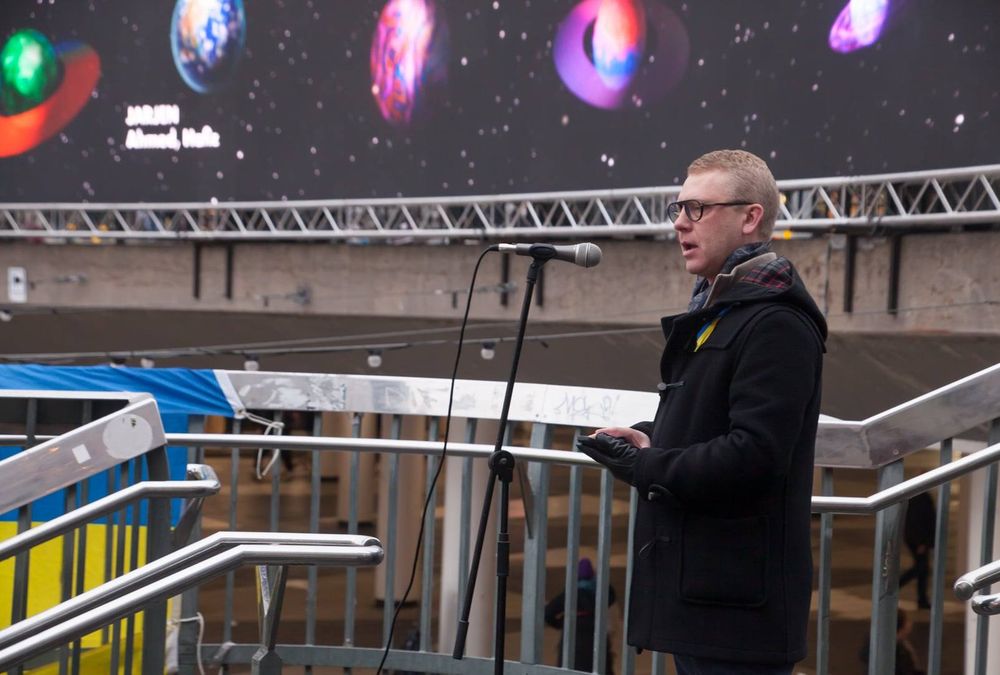
In Stockholm, protesters led by Nordic Ukraine Forum and policymakers — including Member of the European Parliament Karin Karlsbro and Kristoffer Tamsons, member of the Stockholm Region County Council — gathered at Sergels Torg, reminding Swedish firms of their human rights obligations in conflict-affected areas.
Karin Karlsbro said: “If Ukraine does not win the war, what will be left of Europe then? What will remain of our democracy, our peace, our way of life if Ukraine does not win? Nothing! And that is why we must, together, ensure that Ukraine wins the war — because their victory is also our victory.”
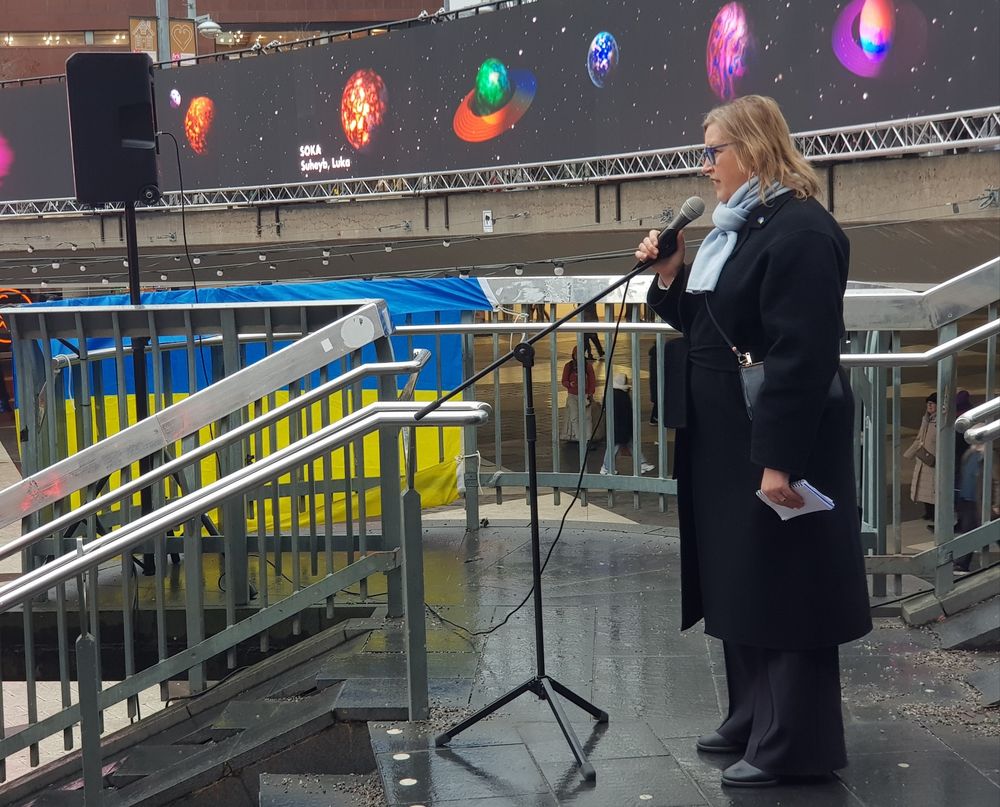
Kristoffer Tamsons said: “To the companies, to our business community — here in Sweden, in the Nordic region, in Europe, and across the world — I want to say this: Doing business with Russia is not neutral today. It is not ‘just business.’ It is taking a stand — and it is taking a stand on the wrong side of history.”
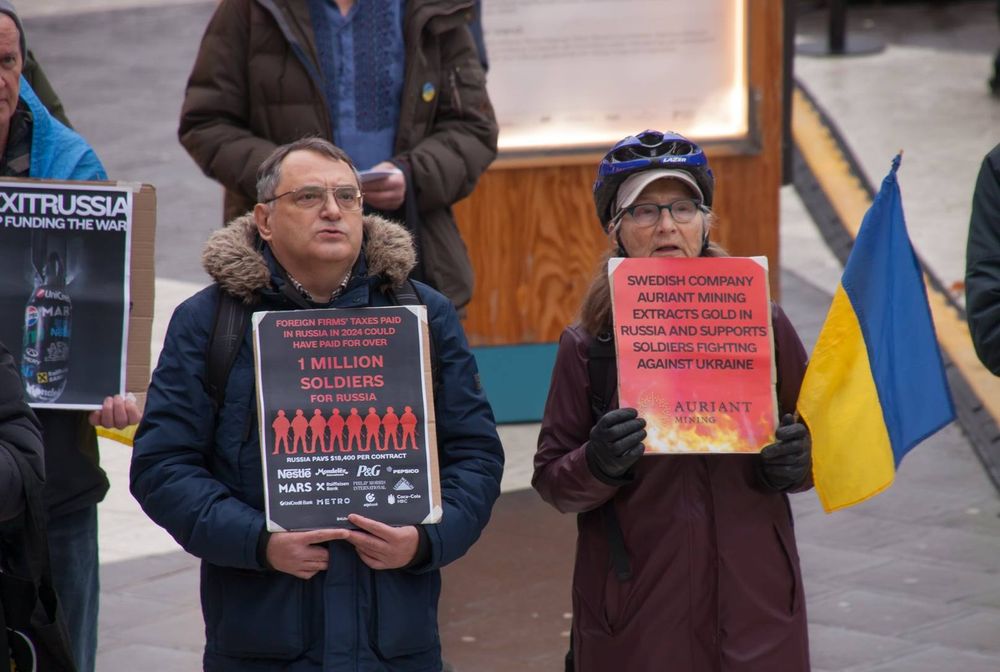
Some protesters in Stockholm held signs featuring the Swedish chocolate brand Marabou. Its owner, the American snack giant Mondelez International, is among the largest foreign taxpayers in Russia.
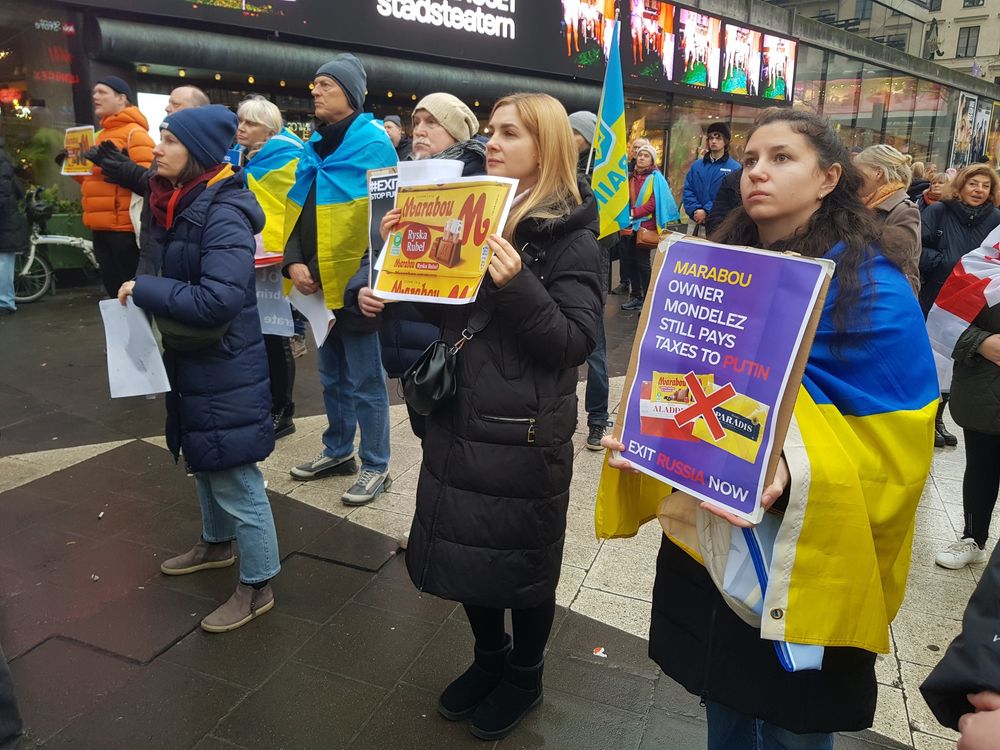
The signs also featured the Swedish company Auriant Mining, which extracts gold in Russia and has reportedly supported Russian soldiers fighting against Ukraine, as well as Aurezzi, a Swedish hygiene-products company that continues to do business in Russia.
In Oslo, activists led by the Ukrainian Association in Norway rallied outside the shop of Norwegian chocolate brand Freia, another company owned by Mondelez.
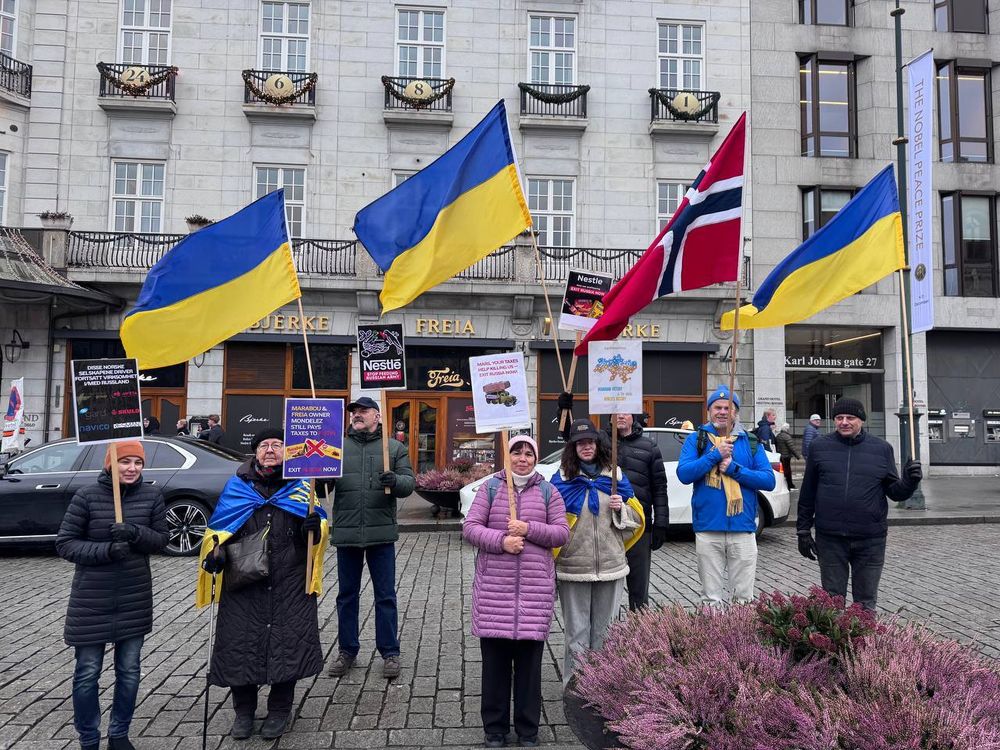
The call for corporate accountability was echoed by activists in Helsinki.“We called for a boycott of businesses that continue to fill the Russian budget and thereby support the Russian war machine. By purchasing products from Mondelez, Nestle, Pepsi, or L’Oreal, you are inadvertently contributing to the financing of Russian aggression,” said the Ukrainian Association in Finland.
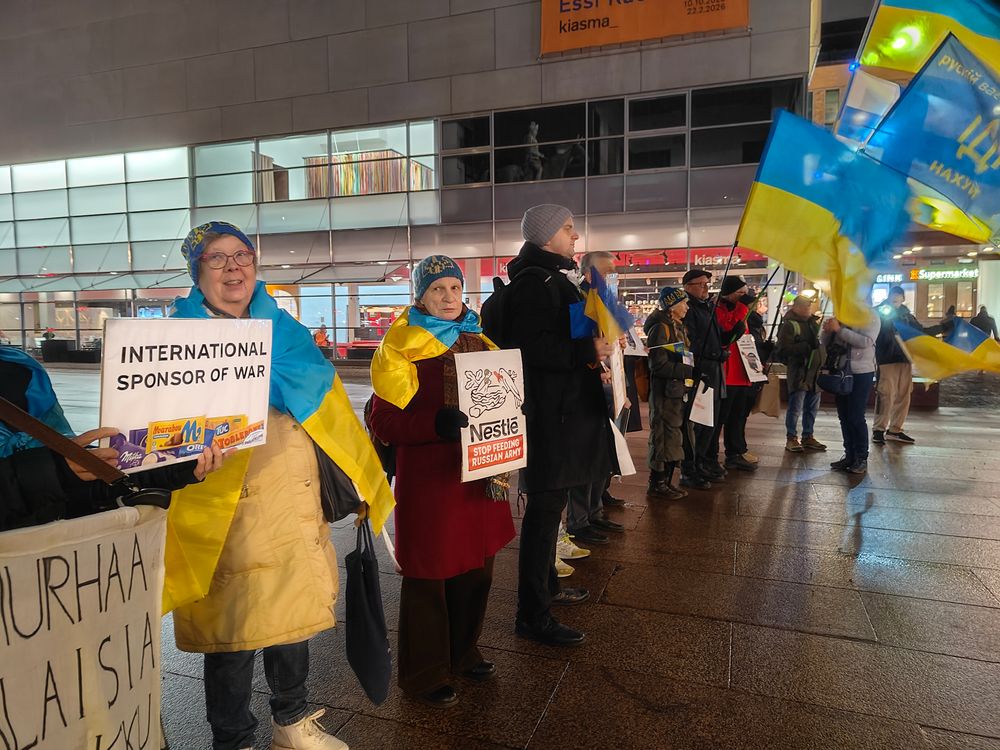
Across Europe, across industries, across borders — the pressure is rising.
This Christmas season, choose brands that are not complicit in financing Russia’s unprovoked war of aggression against Ukraine.
Europe is watching. Ukraine is fighting. Companies must choose a side.