


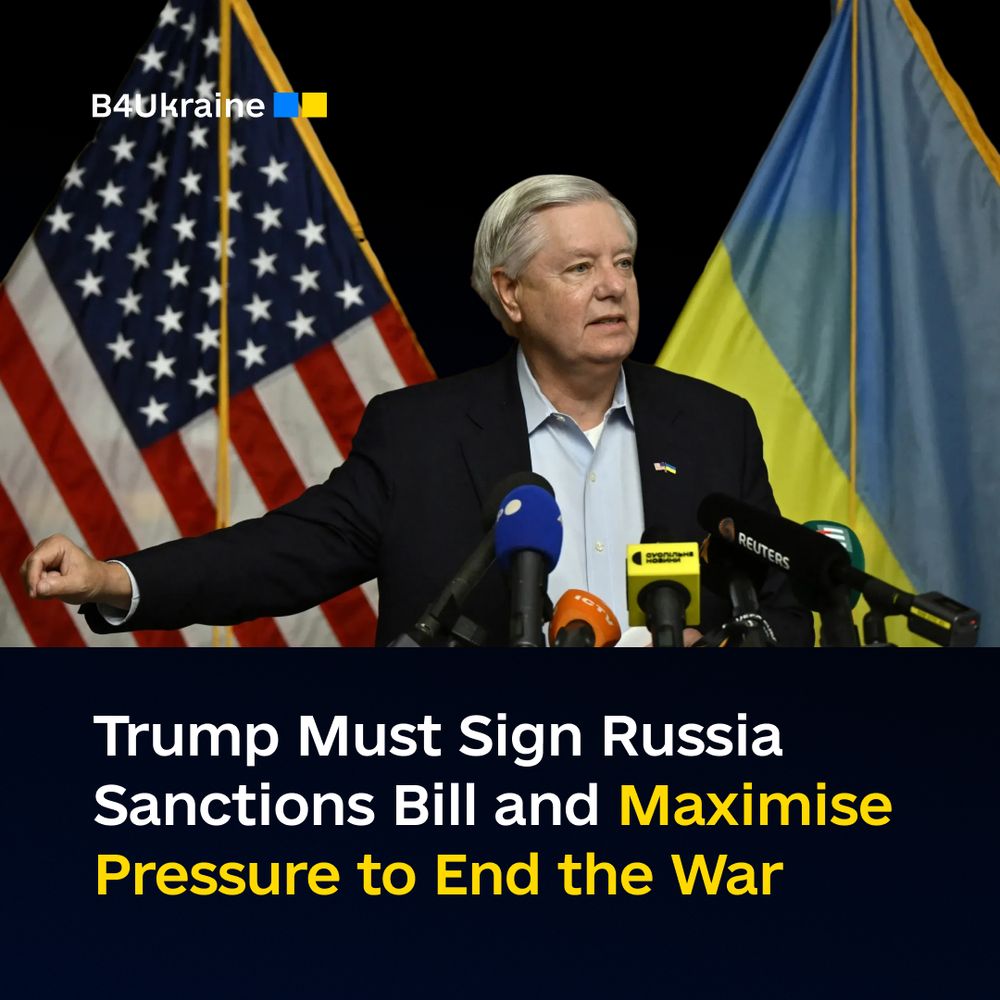


B4Ukraine welcomes the U.S. House of Representatives’ final passage of the Lindsey Graham Sanctioning Russia and Iran Act.
We encourage President Trump to sign it without delay and use the full sanctions authority it provides to impose maximum economic pressure on Russia.
Nezir Sinani, Executive Director of B4Ukraine, said,
“We thank every member of Congress who supported this legislation. This bill is important not only for Ukraine’s survival, but for the United States and the democratic world as a whole. It could prove historic — but only if President Trump signs it swiftly and it is enforced without waivers or loopholes.
President Trump has promised to increase pressure on Russia if it refuses to end the war. The facts are clear: Ukraine is defending itself against aggression and has repeatedly called for peace. President Trump should now demonstrate the strength needed to bring Moscow to the negotiating table.
The House should also use its leverage with President Trump to secure his signature and ensure the law is enforced robustly. This bill will not end the war overnight, but strong and sustained economic pressure can help save lives and bring a just and lasting peace closer.”
The legislation would give the president authority to impose tariffs of up to 100% on the five largest purchasers of Russian oil or gas. China, India and Turkey are among the biggest buyers of Russian crude, while the EU, China and Turkey remain significant importers of Russian natural gas.
The list of countries subject to the measure would be reassessed every 180 days. Countries that account for less than 15% of Russia’s total natural gas exports and are actively reducing their purchases would be excluded.
The bill would also introduce sanctions targeting Vladimir Putin and other senior Russian officials, as well as major financial institutions including the Central Bank of Russia, Sberbank and Gazprombank, alongside Russian state-owned enterprises.
It would extend sanctions to foreign companies and other entities that support Russia’s defence-industrial base, participate in major Russian energy projects or assist the country’s so-called shadow fleet — the network of vessels that enables Moscow to continue exporting oil despite Western restrictions.